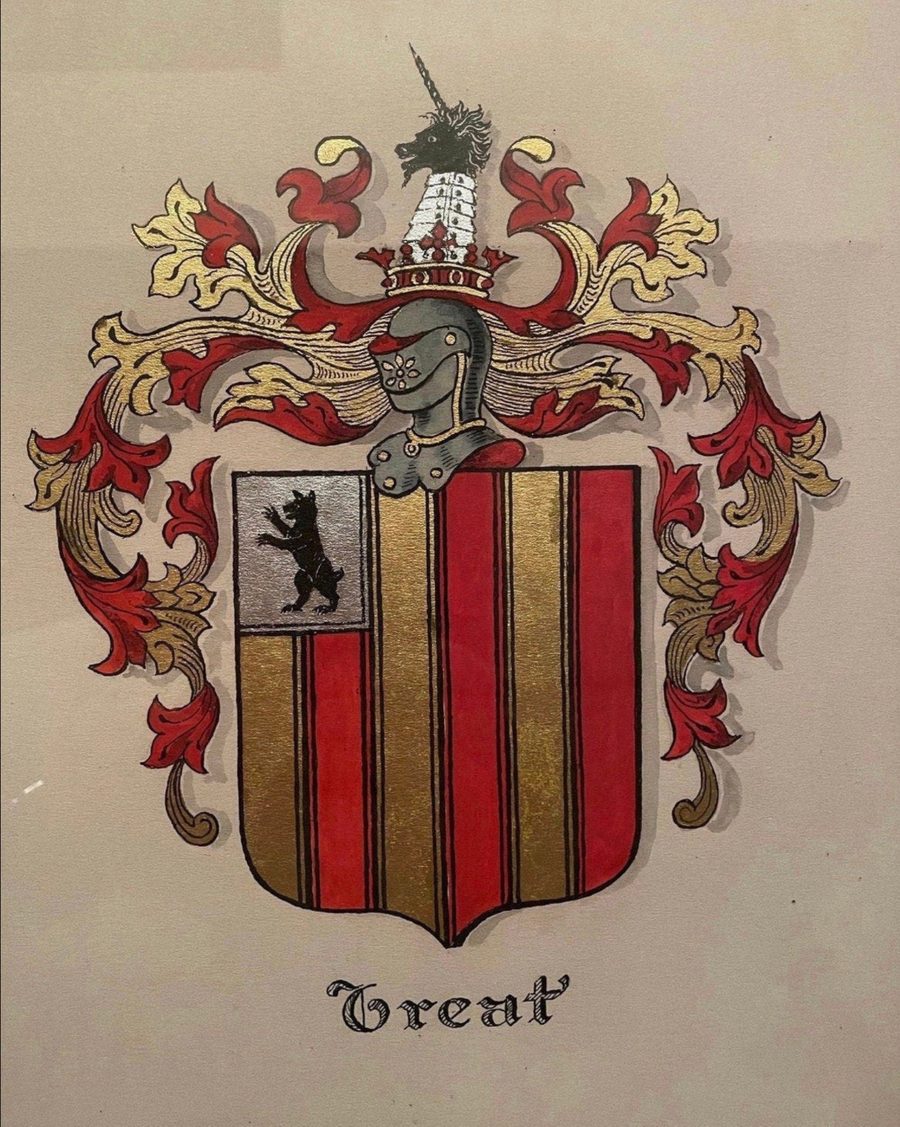
Nearly every Treat in America descends from one man, Richard Trott, baptised in the church at Pitminster in 1584, who crossed the Atlantic with his family in the 1630s and became Richard Treat of Wethersfield. His son Robert founded Newark and governed Connecticut; a grandson preached on Cape Cod; a great-great-grandson carried the name up the Penobscot, where the Maine Treats have been ever since. This page is the family's own: its games, its notable members, and the village it came from.
Games
Two games built by the family, for the family. Both run in the browser on a phone or a laptop; every square and every stop carries a line of the real history.
Treatopoly
The family's board game: forty spaces in order from Set Sail 1637 to Return to Pitminster, the Charter Oak and the Family Bible for the two decks, a lobster bake for free parking. Play online with family in other houses, or against bots named for the ancestors.
PLAY TREATOPOLYThe Treat Trail
Three hundred and eighty-nine years from Pitminster in the style of the Oregon Trail: the crossing, Wethersfield, Newark, the Penobscot and on. Buy provisions, mind the rations and the weather, and get the family through.
PLAY THE TREAT TRAILNotable Treats
Checked against the 1893 genealogy and the published record. Most of these are cousins; the ones in the family's direct Maine line are marked on the line below.
The founders
Within one generation of landing, the family was named in Connecticut's royal charter, had founded Newark, and held the colony's governorship.
- Richard Treat 1584–1669/70
- The immigrant. Baptised Richard Trott at Pitminster, married Alice Gaylord there in 1615, settled at Wethersfield by 1641; deputy and magistrate of the Connecticut General Court, and one of the nineteen patentees named in the 1662 Royal Charter.
- Governor Robert Treat 1624/5–1710
- Richard's son. Helped lay out Milford as a teenager, led the Milford Puritans who founded Newark in 1666, commanded Connecticut's troops in King Philip's War, and was governor of the colony through the Charter Oak affair of 1687.
- Lt. James Treat 1634–1708/9
- Richard's youngest son; the Wethersfield line, from which the Revolutionary soldier Charles Treat descends.
Preachers and the Revolutionary generation
- The Revd Samuel Treat 1648–1716/17
- Governor Robert's son; minister at Eastham on Cape Cod for forty-five years and a missionary to the Nauset people.
- Robert Treat Paine 1731–1814
- Rev. Samuel's grandson through his daughter Eunice. Prosecutor at the Boston Massacre trials, signer of the Declaration of Independence, first attorney general of Massachusetts.
- Dr. Malachi Treat 1735/6–1795
- Governor Robert's great-grandson; physician in the Revolutionary army and New York's health officer.
- Joseph Treat 1690–1756
- Rev. Samuel's son and the first Treat in Boston, a gunsmith licensed to the province; father of the Maine line.
The Maine Treats
Lt. Joshua Treat came up the Penobscot in 1759 as armourer at Fort Pownall, and the family stayed.
- Lt. Joshua Treat 1729–1802
- Joseph the gunsmith's son; armourer and interpreter at Fort Pownall, and by tradition the first settler on the Penobscot above the fort. Frankfort, Prospect and Winterport descend from his household.
- Maj. Robert Treat 1752–1824
- Joshua's half-brother, the family's man at Bangor; his day book is a record of the early river trade.
- Gen. Joseph Treat 1775–1853
- Maj. Robert's son; surveyed the Penobscot country for Massachusetts in 1820, with Penobscot guides, and was on the first recorded ascent of Katahdin.
- Nathaniel Treat 1798–1894
- Lt. Joshua's grandson, of Orono; lumberman, state senator and railroad man on the Penobscot.
- Upham Stowers Treat 1808–1883
- Lt. Joshua's grandson, of Eastport; among the first to can lobster, and the name on Treat Island at the mouth of the Bay of Fundy.
- Charles Henry Treat 1841–1910
- Of Frankfort and New York; Treasurer of the United States under Theodore Roosevelt, 1905–09.
- George Treat 1817/19–1907
- Of Frankfort; reached San Francisco in 1849, raced horses, fought slavery, and left his name on Treat Avenue in the Mission.
Nineteenth century
- Judge Samuel Treat 1815–1902
- Born Portsmouth, New Hampshire; United States district judge at St. Louis for thirty years, and a founder of what became the Washington University law school.
- Judge Samuel Hubbel Treat 1811–1887
- Of the Matthias line; Illinois Supreme Court justice and United States district judge, a colleague and friend of Abraham Lincoln on the circuit.
- Howell B. Treat 1833–1912
- Private, 52nd Ohio Infantry; Medal of Honor for Buzzard's Roost, Georgia, 1864.
- John Harvey Treat 1839–1908
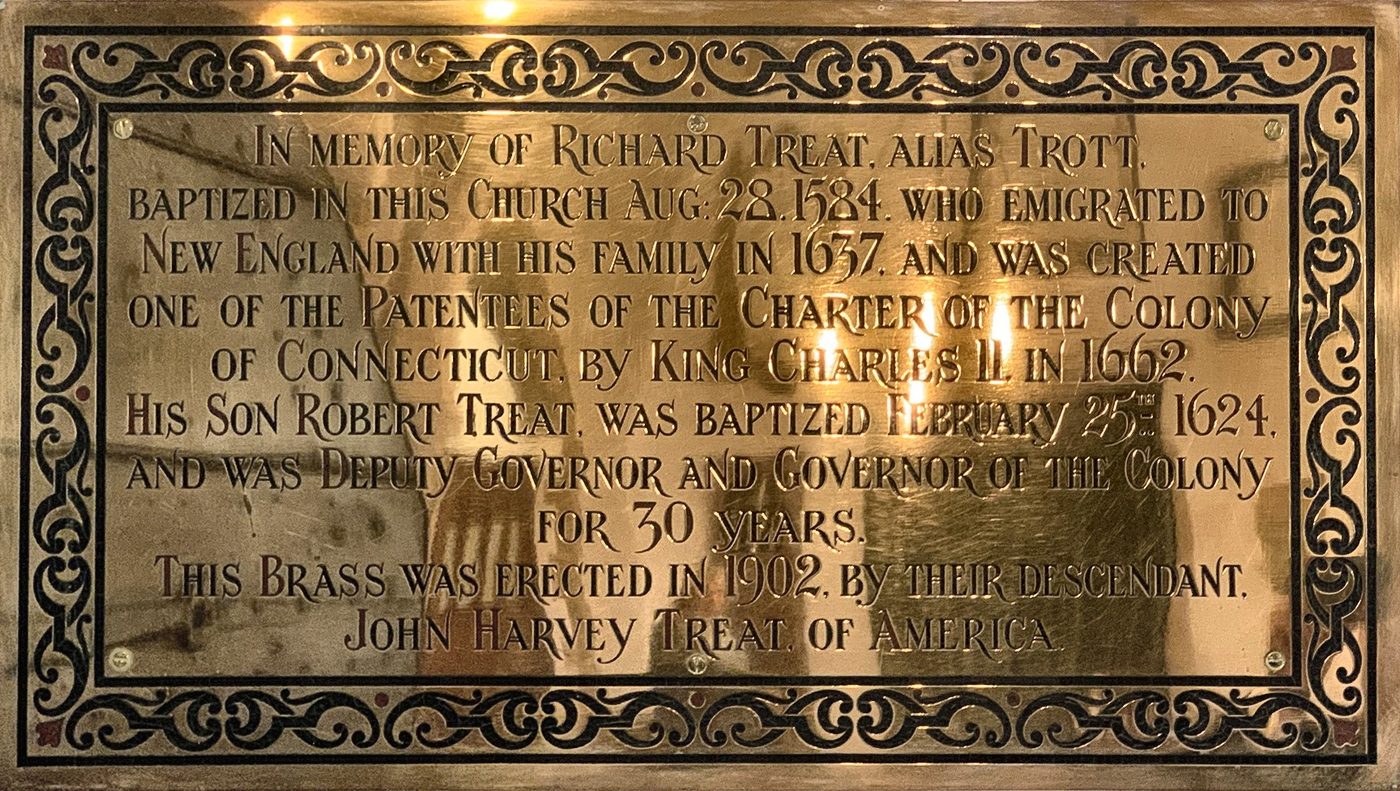
- Of Lawrence, Massachusetts; the family historian. His 1893 genealogy is the book the family still keeps, and in 1902 he placed the brass to Richard and Robert in the church at Pitminster.
- Amos Sherman Treat 1816–1886
- Bridgeport lawyer; Connecticut's delegate to the 1861 Peace Conference and later Speaker of the state House.
Twentieth century
- Judge William W. Treat 1918–2010
- Born Winterport, Maine. Chairman of the New Hampshire Republican party, national committeeman, probate judge for twenty-five years, founder of Bank Meridian, and a member of the UN sub-commission on minorities in Geneva. The Judge William W. Treat Fellowship at the University of New Hampshire carries his name.
- Maj. Gen. Charles Gould Treat 1859–1941
- Born Orono; commandant of cadets at West Point and chief of the American military mission to Italy in 1918.
- Payson Jackson Treat 1879–1972
- Stanford historian; held the first chair of Far Eastern history in the United States.
- Roger Treat 1905–1969
- Sportswriter; compiled the Official Encyclopedia of Football and campaigned against the colour line in the pro game.
- Herb Treat 1900–1947
- Princeton tackle, consensus All-American in 1922.
- Asher E. Treat 1907–2004
- Biologist at City College of New York who discovered the mites that live in moths' ears.
The Line
The documented male line from Pitminster to the Maine Treats of today, as kept on the family tree and checked against the 1893 genealogy. The living generations are left off a public page.
- Richard Trott of Pitminster, who never left Somerset
- Richard Treat 1584–1669, baptised and married at Pitminster; settler of Wethersfield; patentee of the 1662 Charter
- Robert Treat 1624–1710, founder of Newark, Governor of Connecticut
- The Revd Samuel Treat 1648–1717, minister at Eastham on Cape Cod
- Joseph Treat 1690–1756, gunsmith of Boston
- Lt. Joshua Treat 1729–1802, armourer at Fort Pownall, settler on the Penobscot
- Joshua Treat Jr. 1756–1826, who built Frankfort's first log house and mill
- Col. William Treat 1813–1879, of Winterport, of Treat & Co.
- Joshua Treat 1841–1926, of Winterport
- Joshua A. Treat II born 1881
- Judge William W. Treat 1918–2010, born Winterport, of New Hampshire
Pitminster
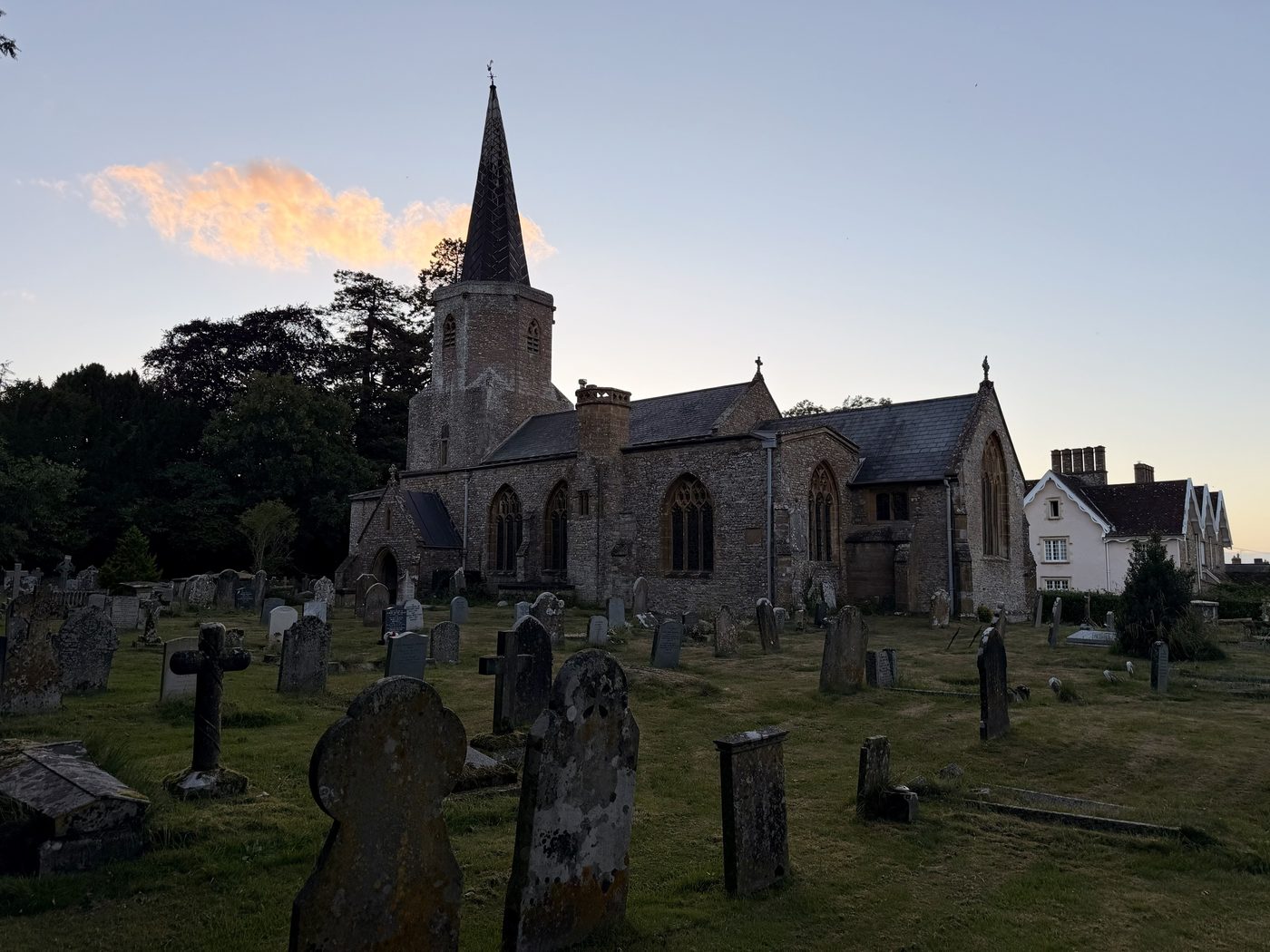
The church of St Andrew and St Mary, where Richard was baptised in 1584 and married in 1615, still stands four miles south of Taunton, with the brass that John Harvey Treat placed there in 1902. The family keeps a separate site about the church, the village and the families who sailed from it, with a family wall where cousins can leave a note.
Links
- The Treat Family: A Genealogy of Trott, Tratt, and Treat, John Harvey Treat, 1893, the full book on the Internet Archive.
- Richard Treat and Robert Treat on Wikipedia, and the list of people named Treat.
- Governor Robert Treat, from the Museum of Connecticut History.
- The church at Pitminster and the village on Wikipedia.
- Treat Island, Maine, named for Upham Treat.
- The 1859 Chace map of Waldo County, with Treatville on it.